The lazy, warm days of summer are winding down, and the familiar hum of preparation is taking over Brentwood homes. August 2026 has officially arrived, bringing a distinct shift in energy. Families across our community are trading beach bags for backpacks, organizing school clothes, and buying fresh supplies. Amid the flurry of shopping for binders, …
The lazy, warm days of summer are winding down, and the familiar hum of preparation is taking over Brentwood homes. August 2026 has officially arrived, bringing a distinct shift in energy. Families across our community are trading beach bags for backpacks, organizing school clothes, and buying fresh supplies.
Amid the flurry of shopping for binders, pencils, and tech gear, there is another essential item that deserves a top spot on your family’s checklist: a comprehensive dental checkup. Adjusting to earlier morning alarms and structured schedules is the perfect time to lock in your family’s essential healthcare routines.
Preventing a mid-semester dental emergency is far easier than treating one in the middle of a busy school week. According to pediatric health data, dental pain and infections are among the leading causes of preventable school absences. A tiny, unnoticed issue can rapidly escalate into a severe, throbbing toothache right when your child is trying to focus on a math test or participate in after-school sports. This forces children to miss valuable classroom time and parents to miss work.
Starting the academic year with a clean bill of health means pairing a professional, in-office dental evaluation with scientifically sound daily habits at home. By understanding how to select the right dental products and executing a consistent preventive routine, you can ensure your kids stay focused, healthy, and entirely cavity-free all year long.
Selecting the Best Toothpaste
Step into the oral care aisle of any local Brentwood supermarket or pharmacy, and you are instantly confronted with a dizzying wall of options. Rows of brightly colored boxes make bold promises, claiming everything from “maximum overnight defense” to “instant, natural whitening.” It is easy to feel overwhelmed.
However, finding the best toothpaste for your family does not require deciphering clever marketing copy. It requires understanding basic dental science. When you know what ingredients to look for, you can ignore the branding gimmicks and make a choice that actively protects your child’s teeth.
Look for the ADA Seal of Acceptance
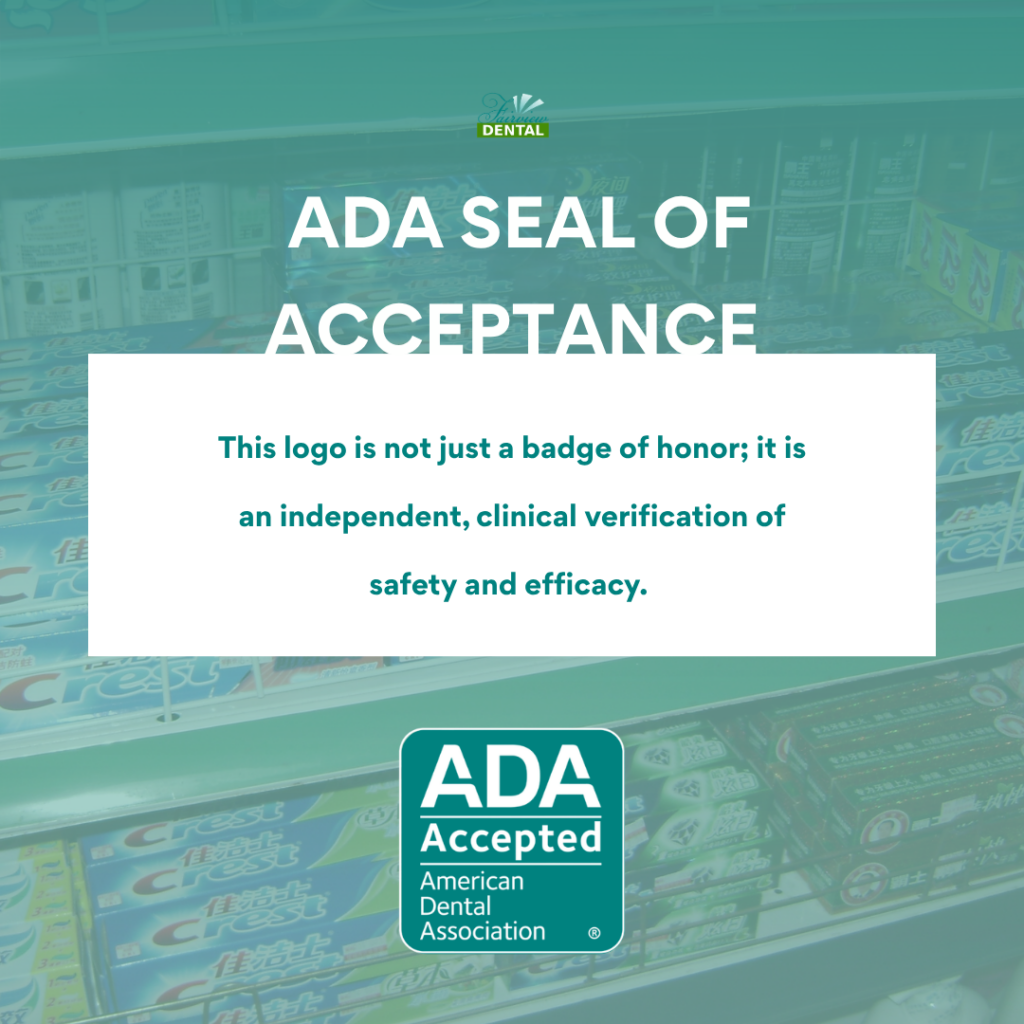
The very first thing to check on any tube of toothpaste is the American Dental Association (ADA) Seal of Acceptance. This logo is not just a badge of honor; it is an independent, clinical verification of safety and efficacy. To earn this seal, manufacturers must submit scientific evidence and laboratory data proving that their product does exactly what it claims to do, is safe for daily oral tissues, and is manufactured in a controlled facility. If a box lacks this seal, put it back on the shelf.
The Science of Fluoride
For genuine protection against enamel breakdown, fluoride is a non-negotiable ingredient. Fluoride is a naturally occurring mineral that acts as a shield for your child’s teeth. When teeth are exposed to fluoride through brushing, the mineral is absorbed directly into the outer enamel layer.
This process, known as remineralization, repairs the early stages of microscopic tooth decay. Furthermore, fluoride integrates into the crystalline structure of the tooth, transforming it into a compound that is significantly more resistant to future acid attacks. While non-fluoride alternatives exist, they do not offer the same scientifically proven defense against decay.
Whitening Versus Sensitivity in Young Mouths
Many parents mistakenly share their adult whitening toothpaste with their children. This is a practice to avoid. Adult whitening formulations often contain high levels of silica or other coarse abrasives designed to scrub away surface stains from coffee, tea, or red wine. Because children’s tooth enamel is thinner and less mineralized than adult enamel, these highly abrasive pastes can prematurely wear down their protective outer tooth structure, leading to permanent enamel loss.
If your child experiences discomfort when drinking cold water or eating hot food, they may have sensitive teeth. In these cases, look for a pediatric or gentle toothpaste containing potassium nitrate. This active ingredient works by traveling deep into the microscopic channels of the dentin to naturally soothe the internal nerve pathways, blocking pain signals before they reach the brain.
Preventing Cavities Before They Start
To prevent a cavity, it helps to understand exactly how decay develops. Tooth decay does not happen overnight; it is a slow, chemical process that occurs right at the surface of the enamel.
Every single day, a colorless, sticky film of bacteria called plaque accumulates on and between our teeth. This plaque thrives on the foods we eat, especially simple starches, refined sugars, and acidic fruit juices.
How Cavities Develop
When your child eats a sugary snack or drinks juice, the bacteria in the plaque consume those simple sugars. As a byproduct of digesting these sugars, the bacteria excrete highly acidic waste. This acid lowers the pH level, launching an attack on the minerals that make up the tooth’s enamel.
If plaque is not thoroughly cleaned away, these localized acid attacks occur repeatedly. Over time, the acid strips away vital minerals, creating microscopic soft spots. If left untreated, these soft spots collapse, forming permanent physical holes in the tooth structures known as cavities.
Early Intervention Protects Your Budget
Catching this process early is the key to painless, affordable dentistry. In its earliest phases, when decay is confined to the outer enamel, the damage can actually be reversed. With professional-strength fluoride applications in our office and meticulous brushing habits at home, we can remineralize that soft spot, saving the tooth without ever needing a drill.
However, once the structural decay penetrates through the enamel and reaches the softer, darker inner layer of the tooth—called the dentin—the damage is permanent. At this stage, the tooth can no longer heal itself. To stop the decay from spreading to the living nerve tissue at the center of the tooth, we must clean out the damaged area and place a dental filling. Letting a small spot of decay go unaddressed always leads to more extensive, uncomfortable, and expensive treatments down the road, such as root canals or dental crowns.
The Role of Advanced Digital X-Rays
Many areas of decay are completely invisible to the naked eye. This is especially true of decay that starts between the teeth, where tight contacts prevent visual inspection. This is why routine diagnostic imaging is a crucial element of our preventive strategy at Fairview Dental.
Our modern digital X-ray technology produces highly detailed images of your child’s mouth using up to 90% less radiation than traditional film X-rays. These images allow us to peer deep inside the grooves of the molars and look right between the teeth. By finding decay when it is nothing more than a tiny shadow on an X-ray, we can treat it with minimal, highly conservative methods, preserving as much of your child’s natural tooth structure as possible.
Finding the Right Dental Office Near Me
As a Brentwood parent, you know how incredibly hectic the start of the school year can be. Balancing academic demands, sports practices, music lessons, and your own professional schedule leaves very little room for logistical headaches.
If you are actively searching for a high-quality dental office near me, physical proximity is only part of the equation. You need a dental practice that actively respects your time, understands your daily demands, and makes maintaining your family’s health as seamless as possible.
Simplified, Comprehensive Care Under One Roof
At Fairview Dental, our goal is to eliminate scheduling friction. We believe that caring for your family’s smiles should not require driving to multiple offices across the East Bay or managing appointments spread out over several weeks.
We offer complete, comprehensive care for every age group under one roof. Whether your toddler needs their very first wellness check, your teenager requires a professional cleaning and mouthguard fitting, or you need routine preventive care for yourself, our skilled team is equipped to handle it all in a single, stress-free location.
Back-to-School Q&A
When should my child start using fluoride toothpaste?
The American Dental Association recommends introducing fluoride toothpaste as soon as your child’s very first baby tooth breaks through the gums, which typically happens around six months of age. At this stage, you should use an incredibly small amount—no larger than a single grain of rice—on a soft-bristled baby toothbrush.
Once your child reaches three years of age and can reliably spit out excess toothpaste rather than swallowing it, you can increase the amount to a pea-sized dollop twice a day. Always supervise young children while brushing to ensure they use the correct amount and spit appropriately.
Why does my child get cavities even though they brush every day?
Brushing every day is an excellent habit, but consistency is only half of the equation; technique and diet play massive roles in oral health. If a child brushes quickly, they often miss the hard-to-reach grooves in the back molars and the areas directly along the gumline where plaque loves to hide. Furthermore, standard toothbrushes cannot reach the tight spaces between teeth, which is why daily flossing is essential.
Diet also plays a quiet but powerful role. It is not just about the amount of sugar your child consumes, but how frequently they consume it. Snacking constantly throughout the day on sticky, starchy foods—like dried fruit snacks, crackers, chips, or sports drinks—bathes the teeth in a continuous bath of acid. Giving teeth time to recover between meals is just as important as the brushing itself.
Step Into the New School Year Cavity-Free
A vibrant, healthy smile is just as vital to your child’s academic confidence and classroom performance as the right textbooks and a reliable laptop. When a child’s mouth is healthy, they can focus entirely on learning, playing, and making new friends, rather than dealing with chronic discomfort or dental anxiety.
By equipping your family with the best toothpaste for their needs, understanding the simple steps to stop a cavity before it grows, and maintaining consistent routine cleanings, you give your children the strongest possible foundation for the academic year ahead.
Are you ready to cross back-to-school dental exams off your family’s seasonal to-do list? Fairview Dental is proud to serve our community with convenient scheduling options, including evening hours and dedicated Saturday blocks designed specifically for busy Brentwood parents. Give us a call or visit our website today to schedule your family’s appointments before the school year gets into full swing!