Bone Grafting in Brentwood
When Bone Loss Makes Implants Impossible Without a Graft
Here’s something we tell patients in Brentwood almost every day. You want a dental implant, you’re ready to move forward, but your jaw doesn’t have enough bone to hold one. It’s not your fault. And it’s more common than you’d think.
Bone loss happens for a lot of reasons. Sometimes it’s been years since a tooth fell out or got pulled. The jawbone in that spot starts to shrink because nothing’s there to keep it stimulated. Other times, gum disease has quietly eaten away at the bone underneath. A patient comes in expecting to jump straight into a dental implant, and the 3D imaging tells a different story.
So what does that actually look like? Your jaw might feel fine. No pain, no swelling. But on the scan, we can see the bone is too thin or too shallow to support an implant post. Without enough structure, an implant would fail. It could shift, loosen, or never fuse properly. That’s where bone grafting changes everything.
The most common situations we run into include:
- A tooth that’s been missing for a year or more with visible ridge shrinkage
- Bone loss from long-term periodontal disease
- An old extraction site where the socket was never preserved
- Upper jaw thinning close to the sinus cavity
Bone grafting rebuilds what’s missing. It gives your jaw the volume and density it needs so a dental implant can actually hold. Dr. Luu evaluates every case with digital imaging before recommending anything, so you’ll know exactly what’s going on before any decisions get made.
Not sure if bone loss is affecting you? That’s actually pretty common. Most people can’t tell on their own, the changes happen below the gumline where you can’t see or feel them.
Graft Material Options Explained in Plain Language
This is the part where most people’s eyes glaze over. We get it. But picking the right graft material matters, so let’s keep this simple.
There are four main types of bone graft material we use here in Brentwood. Each one works a little differently, and Dr. Luu will walk you through which one fits your situation.
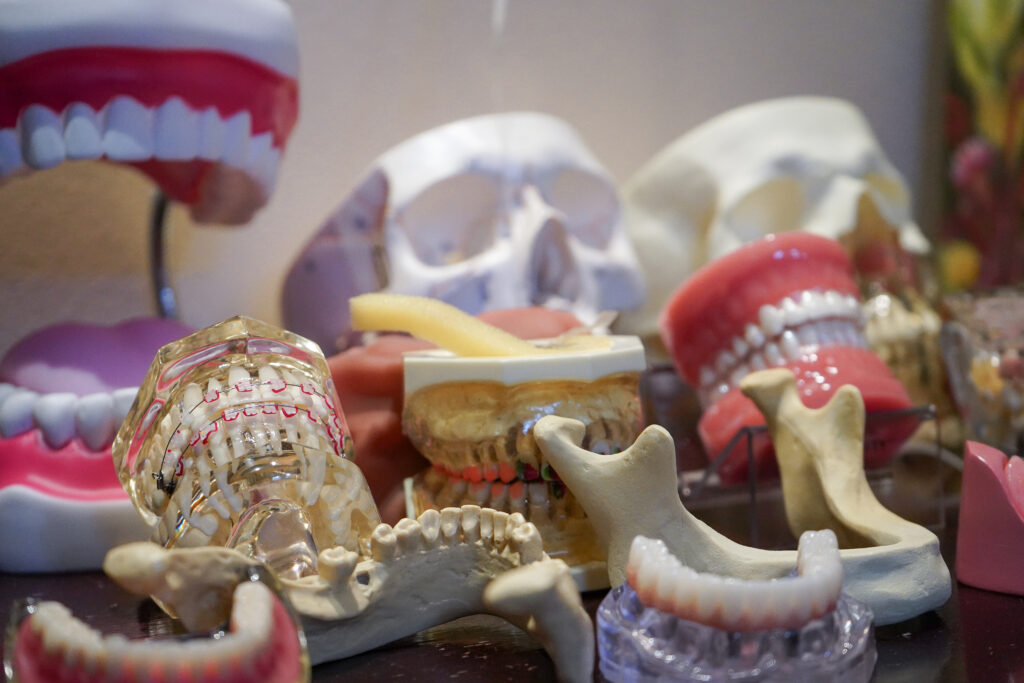
- Autograft (your own bone): This comes from another spot in your mouth, usually the chin or the back of your jaw. It’s your own living tissue, so your body accepts it right away. We use this when we need the strongest possible foundation.
- Allograft (donor bone): This is processed human bone from a tissue bank. It’s thoroughly screened and sterilized. This is what we reach for after a tooth extraction because it works well and doesn’t require a second surgical site.
- Xenograft (animal-derived): Usually sourced from bovine bone. It’s been used in dentistry for decades. The mineral structure is very close to human bone, giving your body a solid scaffold to build on.
- Synthetic graft: Lab-made materials like calcium phosphate that mimic real bone. These are a good option when patients prefer something that doesn’t come from a human or animal source.
So how do we decide? It depends on the size of the area, where it is in your jaw, and what comes next. A patient came in last month needing bone grafting before dental implants. The gap was small and an allograft did the job perfectly. But someone with a larger defect along the upper jaw might need a different approach entirely.
There’s no single material that works for everyone. There’s only the material that fits your mouth, your health, and your goals. According to the American Academy of Periodontology, all four types can lead to successful outcomes when matched correctly to the case.
Not sure which option makes sense for you? Give us a call and we’ll figure it out together.
And don’t worry about memorizing any of this. Dr. Luu explains everything during your consultation using your own 3D imaging so you can actually see what’s going on.
Step-by-Step: What Happens During Your Bone Grafting Procedure
Most people feel nervous because they don’t know what to expect. That’s fair. So let’s walk through exactly what happens when you sit down in our Brentwood office for bone grafting.
We do this every week, and the process is more straightforward than you’d think.
- Numbing and comfort. We start by getting you completely numb. If you’re anxious, we offer nitrous oxide or oral sedation. You pick what feels right. Either way, you won’t feel pain during the procedure.
- Accessing the site. Dr. Luu makes a small opening in the gum tissue to expose the bone underneath. This gives us a clear view of exactly how much bone is missing and where the graft needs to go.
- Placing the graft material. We pack the grafting material into the area where bone has been lost. Think of it like building a scaffold. Your body will use that scaffold to grow new, healthy bone over the coming months.
- Securing everything. A membrane often goes over the graft to protect it while it heals. Then we close the gum tissue with a few small sutures.
- Post-op review. Before you leave, we go over your recovery instructions in detail. What to eat, what to avoid, when to come back.
The whole thing usually takes 45 minutes to an hour. Sometimes less. Patients often tell us they expected something much more involved, but it’s really a focused, controlled procedure.
Here’s something we notice a lot. People come in bracing for the worst, then they’re surprised at how calm the experience actually is. The anticipation is harder than the appointment.
Recovery is manageable for most folks with over-the-counter pain relief for a couple of days. Some mild swelling is normal. We’ll check in with you and schedule a follow-up to make sure the graft is healing the way it should. Your bone needs time to rebuild, and that timeline varies, but we’ll keep you informed at every step.
Recovery After a Bone Graft: A Realistic Healing Timeline
Most patients walk out of our Brentwood office feeling better than they expected.
The first 48 hours matter most. You’ll have some swelling, maybe mild soreness around the graft site. An ice pack and over-the-counter pain relief handle it for most people. Stick to soft foods, scrambled eggs, yogurt, soup. Nothing crunchy or chewy near the area. And don’t use a straw, because the suction can disturb the graft material before it settles.
Here’s a rough timeline of what to expect after bone grafting:
- Days 1-3: Peak swelling and tenderness. Rest as much as you can. Avoid exercise or heavy lifting.
- Days 4-7: Swelling starts dropping off. You can ease back into normal meals, just be gentle around the site.
- Weeks 2-4: Soft tissue heals over the graft. You’ll come back so we can check progress.
- Months 3-6: The graft fuses with your natural bone. This is the real healing, and it happens quietly beneath the surface.
- Month 6+: For many patients, the jaw is now strong enough for a dental implant or other next step.
Not sure if your healing is on track? Some folks call us a week in just wanting reassurance. We’re happy to take a look.
One thing people don’t always realize is that bone grafting recovery doesn’t mean you’re stuck at home for months. The early discomfort fades fast. The longer phase, where bone integrates, happens while you go about your normal life. You won’t feel it. According to the American Academy of Implant Dentistry, bone graft success rates are high when patients follow post-op care instructions closely.
Dr. Luu gives every patient a clear set of aftercare steps before they leave. No guessing. We also schedule follow-up visits using 3D imaging to confirm the graft is developing the way it should. That kind of visual confirmation makes a big difference in knowing exactly where you stand.
But the biggest factor in a smooth recovery? Following the instructions we send you home with.
Why Waiting on a Bone Graft Costs You More Than Time
We hear it all the time. “I’ll deal with it later.” But jawbone doesn’t wait for you to be ready.
Once a tooth is gone, the bone underneath starts to shrink. It happens fast. Most people lose about 25 percent of their bone width in the first year after an extraction, according to the American Academy of Implant Dentistry. That’s not a slow fade. That’s your jaw changing shape while you’re putting off a phone call.
The longer you wait, the less bone we have to work with. A simple bone graft that could’ve been done right after your extraction turns into something bigger. Sometimes it means a sinus lift on top of the graft. Sometimes it means we need to build up bone in multiple areas before a dental implant is even possible. What started as one procedure becomes two or three.
We see this every week with patients right here in Brentwood. Someone comes in wanting an implant, but they had a tooth pulled two or three years ago and never followed up. The bone has resorbed so much that we’re starting from a harder spot. It’s fixable, but it takes longer and requires more healing time.
There are real consequences beyond the bone itself:
- Your neighboring teeth can shift into the gap, creating bite problems
- Your facial structure starts to change as the jaw loses volume
- Gum tissue thins out, making future procedures more involved
- You may need additional imaging to plan a more complex approach
None of this is meant to scare you. It’s just what we see play out over and over in our Brentwood office. The patients who move forward with bone grafting sooner have smoother recoveries and simpler treatment plans.
So if you’ve already lost a tooth or you know an extraction is coming, don’t sit on it. The window for the easiest version of this procedure closes faster than most people think.
Frequently Asked Questions About the Service
How long does it take before I can get a dental implant after bone grafting in Brentwood?
Most patients wait three to six months after bone grafting before placing a dental implant. Your jaw needs that time to grow new bone around the graft material. The exact timeline depends on how much bone was lost and where it is in your jaw. Upper jaw cases near the sinus cavity sometimes take a little longer. Dr. Luu monitors your healing with follow-up imaging so we know exactly when your jaw is ready — not just guessing.
Will I be in a lot of pain during or after the bone grafting procedure?
You won’t feel pain during the procedure because the area is completely numb. If you’re nervous, sedation options like nitrous oxide are available. After the procedure, most patients manage just fine with over-the-counter pain relief for a day or two. Some mild swelling is normal and expected. The recovery is much more manageable than most people expect — the anticipation is usually worse than the actual experience.
Does it matter which graft material is used for my specific situation in Brentwood?
Yes, the right material depends on the size of the area, its location in your jaw, and what treatment comes next. In Brentwood, we see a wide range of cases — small gaps after a single extraction often do well with allograft, while larger defects may need a different approach. Patients who prefer to avoid human or animal-sourced materials can use synthetic options instead. Dr. Luu reviews your 3D imaging before recommending anything, so the choice is always based on your actual anatomy.
What happens if I skip bone grafting and just get an implant placed anyway?
Skipping the graft when bone volume is low puts the implant at serious risk. Without enough bone structure, the implant post can’t fuse properly. It may shift, loosen, or fail entirely — which means starting over. This is one of the most common reasons implants fail. Getting the graft done first takes more time, but it gives your implant a real foundation to hold onto long-term.
How do I know if I've already lost bone in my jaw before coming in?
Most people in Brentwood can’t tell on their own. Bone loss happens below the gumline where you can’t see or feel it. A tooth missing for a year or more, a history of gum disease, or an old extraction site that was never treated are all common signs. The only way to know for sure is with 3D imaging. If it’s been a while since a tooth was removed and you haven’t had it checked, it’s worth finding out before the bone shrinks further.
Is bone grafting done the same day as a tooth extraction, or is it a separate appointment?
In many cases, bone grafting can be done at the same time as a tooth extraction — this is called socket preservation. Doing it right away helps prevent the ridge from shrinking before an implant can be placed. Whether that’s the right approach for you depends on the condition of the extraction site and what your treatment plan looks like. Dr. Luu reviews this during your consultation so you know exactly what to expect before anything is scheduled.