
As the vibrant blossoms of California poppies and almond trees blanket the East Bay, residents of Brentwood, CA and the surrounding Bay Area know spring has arrived. However, for many, this seasonal beauty comes with a literal headache. The Bay Area is notorious for fluctuating pollen counts, where oak, birch, and grass pollen create an …
As the vibrant blossoms of California poppies and almond trees blanket the East Bay, residents of Brentwood, CA and the surrounding Bay Area know spring has arrived. However, for many, this seasonal beauty comes with a literal headache. The Bay Area is notorious for fluctuating pollen counts, where oak, birch, and grass pollen create an invisible mist that triggers sneezing, itchy eyes, and congestion for thousands.
While most reach for nasal sprays, few realize the “pollen vortex” is doing more than irritating their respiratory system, it is actively attacking their oral health. At Fairview Dental, we see a significant uptick in specific dental complaints during the spring. From mysterious toothaches to chronic bad breath, the connection is undeniable.
Allergies create a “perfect storm” through three primary mechanisms: dry mouth, mouth breathing, and the side effects of common medications. This guide explores how allergies affect oral health and provides dentist-approved strategies to navigate allergy season.
Mouth Breathing and Dry Mouth (Xerostomia)
When you inhale pollen, your immune system releases histamines, leading to nasal inflammation and congestion.
- The Mouth Breathing Link: Because nasal passages are obstructed, your body naturally switches to mouth breathing. This bypasses the nose’s ability to humidify air, leading to rapid saliva evaporation.
- The Saliva Crisis: Saliva is the primary defense for your teeth, neutralizing acids and carrying essential minerals like calcium and phosphate to repair enamel.
- The Consequences: According to the American Dental Association, a lack of saliva significantly increases the risk of tooth decay, halitosis (bad breath), and inflamed gums.
Antihistamine Side Effects: A Double-Edged Sword
To combat sneezing, many turn to over-the-counter antihistamines like Zyrtec (cetirizine), Claritin (loratadine), or Allegra (fexofenadine). While effective, these medications have a notorious systemic side effect: they dry out mucus membranes.
The same mechanism that stops a runny nose also tells salivary glands to slow down. This “double hit” of dryness (caused by both mouth breathing and medication) can lead to rapid enamel erosion. For antihistamine dry mouth solutions, hydration and saliva stimulants are your best friends.
Sinus Pressure and Spring Allergy Tooth Pain
One of the most common reasons patients visit our Brentwood dental office in the spring is a sudden ache in their upper back teeth, often fearing they need a root canal. However, the culprit is frequently the sinus.
- Anatomy: The maxillary sinuses sit directly above your upper jaw. Often, the roots of your upper molars sit very close to the floor of these sinuses.
- The Pressure Effect: When allergies trigger inflammation, sinus linings swell and fill with fluid. This pressure bears down on tooth root nerve endings, causing spring allergy tooth pain.
- Diagnosis: If pain is accompanied by facial fullness or congestion, it is likely sinus-related. If the pain is sharp or localized to a single tooth, it is vital to see a professional to rule out an abscess or infection.
Your Allergy Survival Toolkit
You don’t have to choose between breathing clearly and keeping your teeth healthy. Protect your smile with these steps:
Elevate Hygiene: Brush twice daily with fluoride toothpaste and floss every night to ensure post-nasal drip bacteria aren’t lingering on your gum line.
Hydrate Strategically: Drink filtered water consistently to rinse the mouth and keep tissues hydrated.
Stimulate Saliva Flow: Use Xylitol gum to inhibit cavity-causing bacteria or products like Biotene to provide long-lasting moisture.
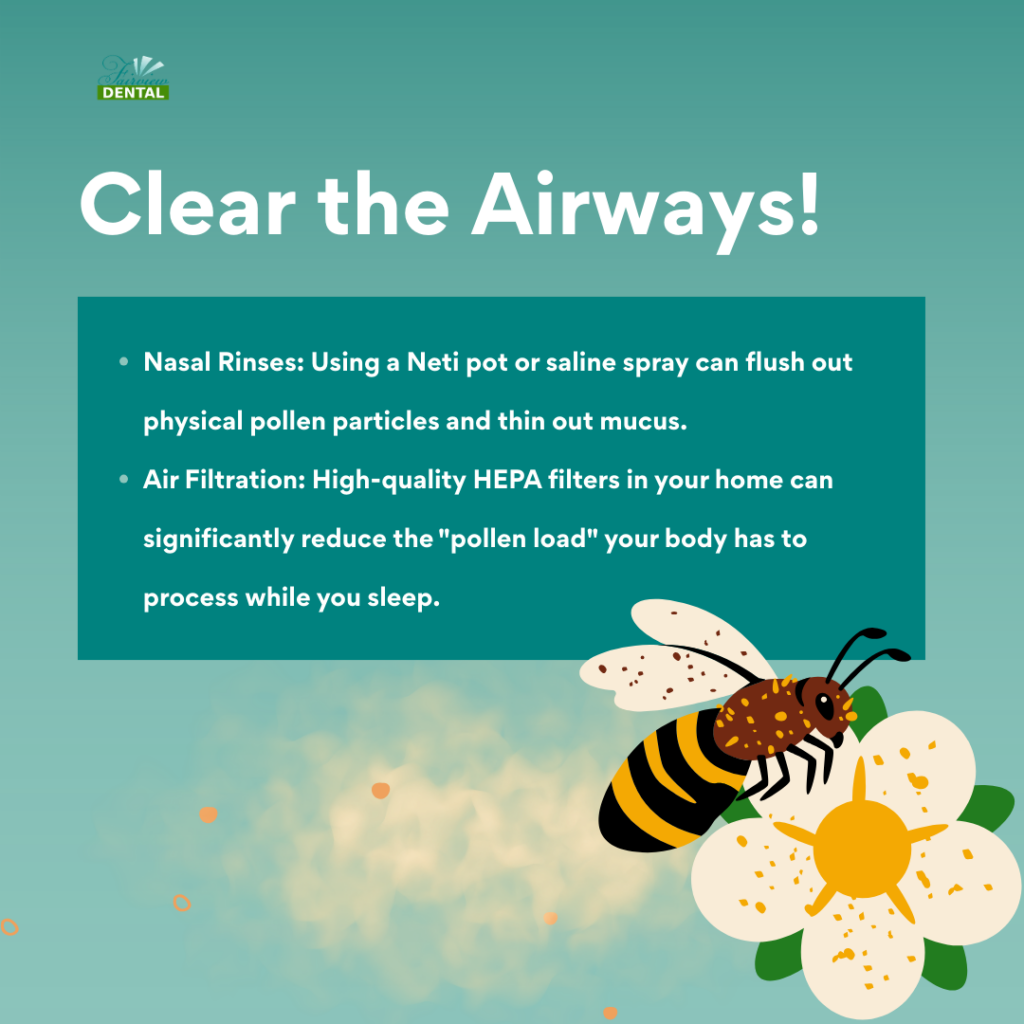
Clear the Airways: Use nasal rinses (Neti pots) to flush out pollen and reduce the need for mouth breathing.
Humidify Your Environment: Using a humidifier in your bedroom prevents oral tissues from drying out during the night.
Be Proactive with Your Brentwood Dentist
Coping with pollen and hay fever requires a proactive approach. Don’t let seasonal allergies lead to permanent damage. Whether you need a professional cleaning to counteract dry mouth or a diagnostic exam to pinpoint tooth pain, we are here to help.
Are you experiencing persistent tooth pain or chronic dry mouth?
Schedule your appointment with Fairview Dental today and let us help you keep your smile bright and healthy all season long!